How Your Home Environment Shapes Your Mood and Productivity
Have you ever walked into a room and felt your shoulders drop? Or sat down to work at a cluttered desk and spent the next 20 minutes staring at the wall, unable to get work done?
The spaces we live in are constantly sending us signals. And whether we’re aware of it or not, we’re always responding to them.
Your Home Is Sending Signals
We spend a lot of energy trying to manage our moods and productivity from the inside. Better habits, better mindset, better morning routines. All of that matters. But we often overlook the influence of what’s happening around us, surrounding us every single day.
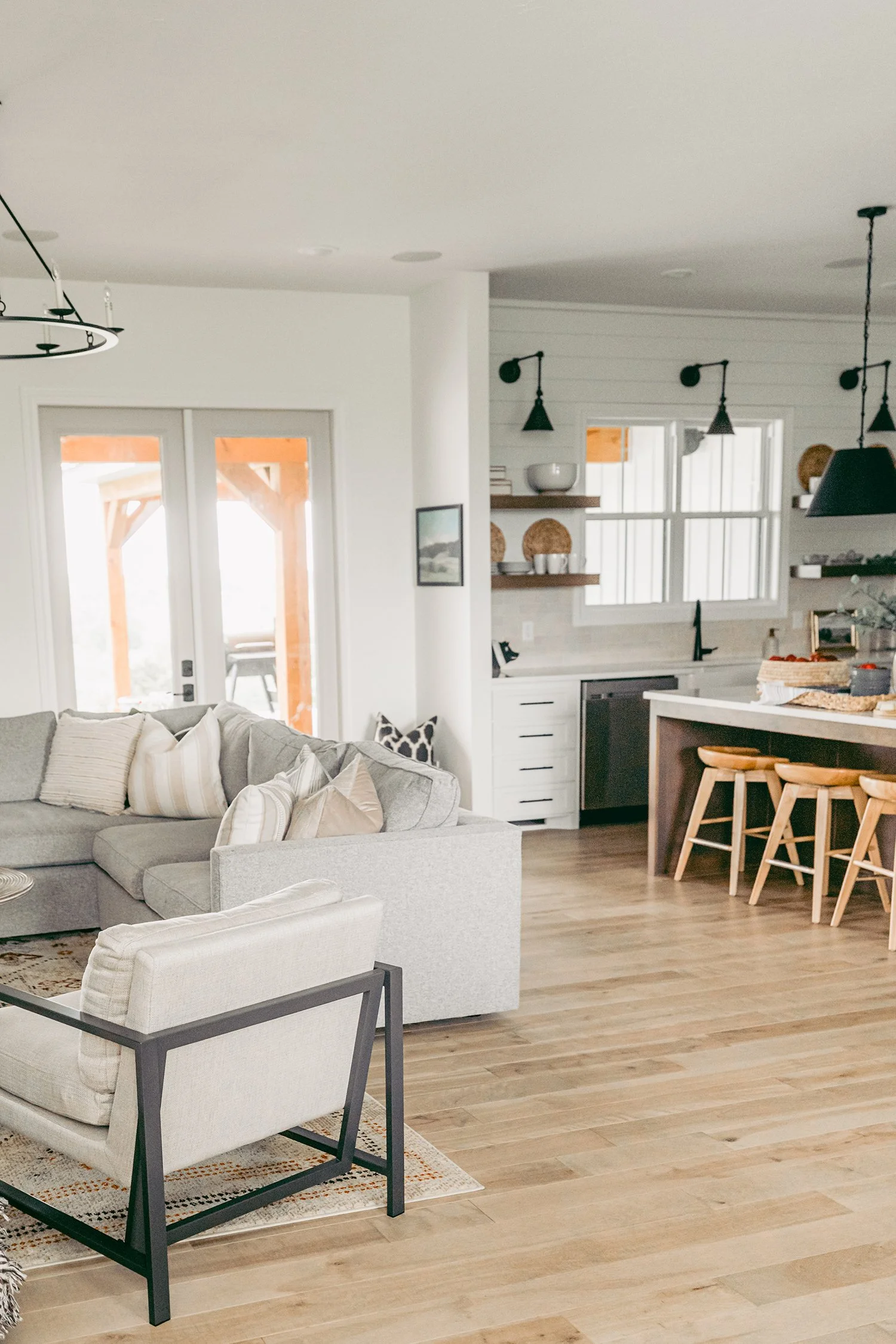
Your home should support your life.
The amount of natural light in your living room affects your energy levels and sleep hormones. The color on your bedroom walls influences how quickly your nervous system winds down at night. The pile of unopened mail on your kitchen counter is a low-grade stressor you’re absorbing every time you walk by, even when you’re not consciously thinking about it.
Once you start seeing your space this way, as something that’s either working with you or against you, a lot becomes clearer.
Light: A Good Place to Start
Natural light is one of the most well-documented environmental factors affecting how we feel and function. It regulates our circadian rhythm, supports serotonin production, and helps with focus and alertness during the day.
If your home doesn’t get a lot of natural light, that’s okay. It just means being a little more intentional. Open your curtains first thing in the morning. Rearrange your furniture so your primary work or sitting area faces a window. Add mirrors to bounce light around a dim room.
When the sun goes down, layer your lighting. Harsh overhead lighting in the evening can signal to your brain that it’s still midday, making it harder to wind down. Swap in warmer, lower lights. Floor lamps, table lamps, candles. The shift in atmosphere is noticeable.
Clutter Is a Cognitive Load
Clutter isn’t just an aesthetic problem. It has a real psychological effect.
Every item in your space that is out of place, unfinished, or undefined takes up a small piece of your mental bandwidth. Researchers have found that cluttered environments increase levels of cortisol, the stress hormone, particularly in women. That low hum of unease you feel in a messy room is worth paying attention to.
This doesn’t mean you need a minimalist, magazine-worthy home. It means being honest about what’s creating visual noise in your space. A junk drawer is fine. A junk living room is draining.
Start small. Designate a landing zone near your front door so bags, shoes, and mail have a home. Clear your kitchen counters of everything except what you use daily. Create one calm corner in your home, even just a chair and a side table, that stays tidy and becomes your reset spot.
Color and How You Feel
Color psychology can sound a little abstract until you start paying attention to how you feel in differently colored spaces. Soft blues and greens tend to have a calming effect, which is why spas lean into those tones. Warm yellows and oranges create energy and encourage conversation, which is why they show up in kitchens and dining rooms. Deep tones like forest green, navy, or terracotta can feel grounding and cozy.
You don’t need to repaint your entire home. Color can come in through pillows, throw blankets, art, plants, and accessories. If you’ve been feeling anxious and wired at home, look around. Is your space full of bright, high-contrast colors and patterns? Softer, more muted tones might help more than you’d expect.

And if you’ve been feeling sluggish? A bit of warm color in your workspace can help shift your energy. Even a vibrant plant or a piece of art you love can make a difference.
The Scent Factor
We talk a lot about what we see in our homes, but scent is worth paying attention to too. Our olfactory system is directly connected to the part of the brain responsible for emotion and memory. A certain candle can take you straight back to your grandmother’s kitchen. The smell of fresh sheets can make you feel immediately more settled.
You can use this to your advantage. A diffuser with peppermint or citrus in your workspace can support alertness and focus. Lavender in your bedroom supports relaxation and sleep. A candle you love, lit during your wind-down routine, becomes a cue that it’s time to rest.
You don’t need a lot of products to make this work. One or two scents you enjoy, used consistently in the right spaces, is enough.
Designing for the Life You Actually Live
The most beautifully designed home won’t serve you well if it doesn’t reflect how you actually live.
If you work from home, your space needs a dedicated work zone. Even if it’s just a specific corner of the dining table that you set up and break down each day. The physical act of setting up your workspace signals to your brain that it’s time to focus. Clearing it away signals that work is done. Those transitions are worth creating.
If you have kids, a partner, a dog, or all three, your home needs to function for real life. Not just look good in photos. A mudroom that actually catches the chaos when people come in. A kitchen that works with how your family eats. A living room that invites people to sit and stay.
Design for your life, not someone else’s. The question to come back to is simple: does this space support how I want to feel and what I want to do here?
Small Shifts, Real Difference
You don’t need a renovation or a big budget to start experiencing the benefits of a more intentional home. Some of the most effective changes are straightforward:
Make your bed every morning.
It’s one small act of order that can set a positive tone for the day.
Add one living thing to your space.
A plant, fresh flowers, even a little pot of herbs on the windowsill. A touch of nature makes a room feel more alive.
Edit before you add.
Before buying anything new for your home, look at what you can remove. Less visual noise often does more than any new purchase.
Create small rituals.
A specific playlist for focused work. A candle you only light on weekends. A tea you make when you sit down to read. These small habits help your nervous system know what mode it’s in.
Let in more air and light.
Open your windows in the morning, even briefly. Fresh air and natural light are free, and they work.
Your home has a real effect on how you feel day to day. When you start treating your space as something that can actively support your wellbeing, rather than just a place where your stuff lives, small changes start to add up.
Start with one room. One corner. One change. Notice how you feel.
That’s designing your life from the outside in.
Have you noticed the way a certain space in your home affects your mood? I’d love to hear about it in the comments below.